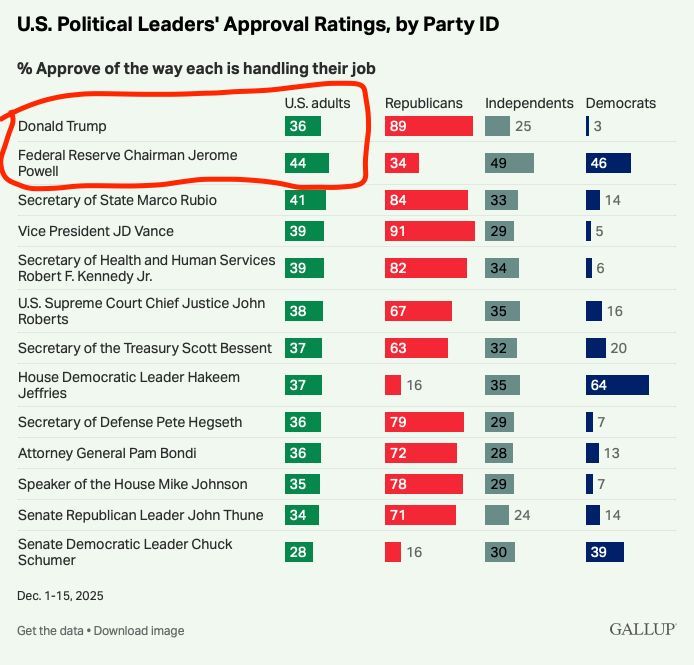
Americans are some miserable bastards right now. The President? We hate him. The last President? Yeah, him too. Leaders in Congress? Congress itself? We despise them. Cabinet members? Members of the judiciary? Yeah, we hate them too. Some are hated so badly (Schumer) that they’re underwater with their own party’s voters. Almost all of them are hemorrhaging a significant number of voters in their own parties, relative to how many Americans even know who they are (View Pew’s numbers here and Gallup’s numbers here).
The truth is that both political coalitions that have ruled the country essentially since Buchanan have cracked, and we’re all just prisoners in the skeletal remains of the two parties. The old Reagan/Bush Republicans are now a minority in their own party, while MAGA runs the show, with a small smattering of Libertarians somewhere in their coalition. The Obama coalition still essentially rules in the Democratic Party but about a third of the party is somewhere between European social democratic (big government) politics and flat out Marxists and Anarchists. The only unity between these groups is essentially their desire to win Presidential and other office nominations for themselves. A lot of Mamdani backers have nothing good to say about Joe Biden, and can barely be considered a member of a similar political party, let alone the same one. When you consider both political parties are fairly unpopular, and neither can really be assured of getting a majority of the popular vote at this point, it’s hard to see a national figure any time soon that reaches 50% approval for a sustained period of time. People would rather cheer for literal terrorists than a leader from the other party, and that includes some segment of your own party.
A few weeks after the 2016 Election I was drinking in DC with some friends from the Obama days, and I said we were entering a 20 year period of darkness in the politics and government of this issue. Basically I said we’d have four or five Presidencies in that period (numerically we’ve had two people serve three individual terms so far), Congress would swing regularly (we’ve had four Speakers since, and the Senate has swung twice), policy would swing wildly (kind of became obvious in 2025), and political rhetoric would get even more adversarial than it was in 2016 (I underestimated the violent element). My theory was we’d get to the end of that and either be good (so still a functioning, sane democracy) and fine, or bad (I’m pretty sure right now we’re closer to whatever the fuck this is) and fine. Maybe I should not make predictions about the future on a December weekday in a Russian bar anymore. The voodoo really woke up on this one.
I have no idea who or what would be the unifying figure to lead us out of this mess. No one will be well liked enough. As is, I don’t think you can put “the old way” back together in DC after Trump. There may not even be anyone liked enough by our population to even make us stop calling each other scumbags and Nazis on social media.
You live in the most advanced time in human history. If you’re an American, you live in the wealthiest and militarily strongest country in the world. There are now apps that can look up virtually any fact on the face of the Earth and feed it to you in seconds, all you have to do is interpret them (thanks AI!). There are stoves that can connect to Wifi. Your car will yell at you if don’t buckle up. You can put money into an investment account every month and that money will make you money over the long haul. We can fight wars with drones instead of people. We have cars that run on electric. Solar energy can power your house. We have planes that can fly you around the world safely, and faster than ever before. I mean, we have the internet.
But God dammit, MAKE AMERICA GREAT AGAIN.
Sure, we’ve sacrificed a lot to achieve the greatness of modernity. Income inequality is higher than at any point in modern history. We pile debt onto you to buy houses, cars, pay for your education, even get married. Your labor is less secure than it was when more of America was in a labor union. Globalizing the market made a shit ton of money for most people, comparable to times when we were more domestic, but it also gutted out “low skill” work and devalued it. Basically we got more comfort and amenities, we made life easier in most ways, but we also traded away any sense of security and protection from ruin. It’s scary. It’s uncomfortable.
However, it is better.
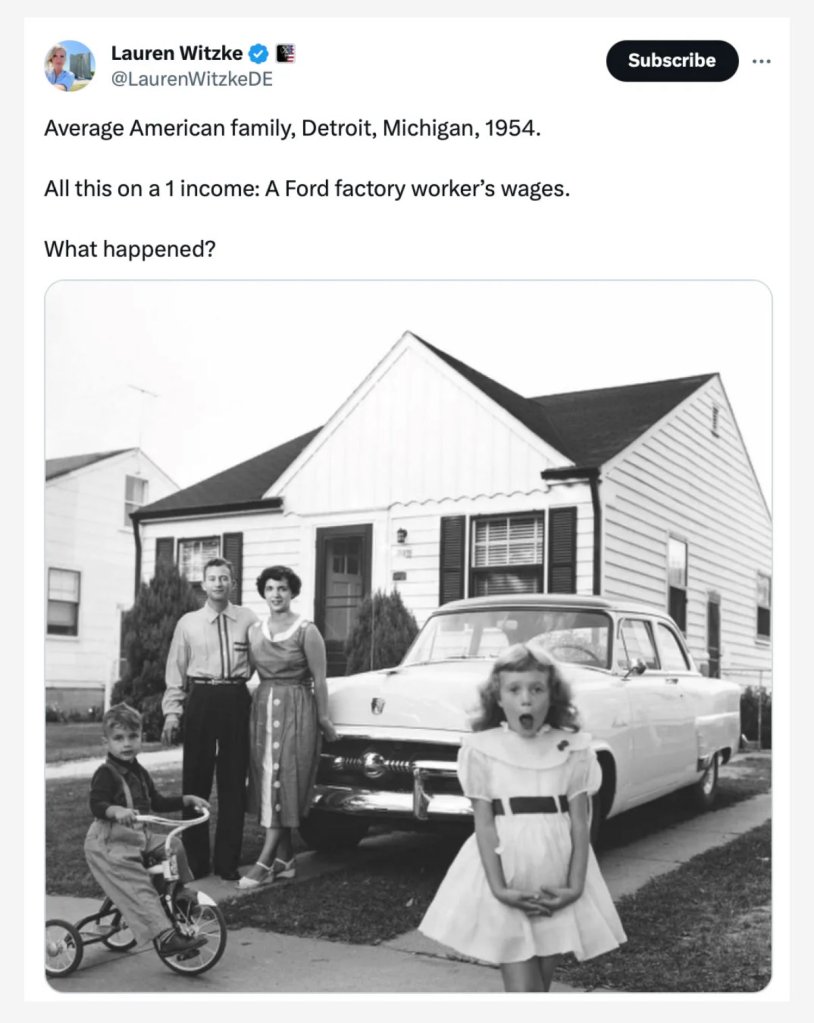
The past really wasn’t that good. Any analytic can tell you that, provided that we even measured these things then. People watched black and white televisions in the 1950’s. Households might have had one car. The internet, personal computer, laptop, Wifi, and social media were completely unheard of, not to mention they didn’t exist. People were poor compared to today:
There probably is some benefit to recognizing that lots of middle-class Americans managed to have good lives and happy childhoods despite growing up with material living standards that would be typical of poverty in the contemporary United States.
That said, nothing is stopping you from dropping out of the workforce to be a full-time domestic worker, eliminating your family’s child care expenses while cooking more economical meals at home. Yes, even with those savings, you would have less money than the average married couple, but you could also choose to live in a smaller-than-average house like the one in the picture. The problem is that you probably don’t want to do that, and your spouse probably doesn’t want you to, either. It’s fine to make the case that the norms around this today are bad and wrong as a matter of values — the Amish show that people certainly can choose to live materially poorer lives if they really want to. But factually speaking, living standards have risen dramatically since the era of that photo, and people who lived like that would be poor today.
In 1950, most homes in Alabama, Arkansas, Georgia, Kentucky, Louisiana, Mississippi, North Carolina, North Dakota, South Carolina, South Dakota, Tennessee, and West Virginia didn’t have complete plumbing. By 1960, the numbers in some of those states were still chillingly high by contemporary standards, but they’d fallen a lot and every state had full plumbing in the majority of homes. To the extent that nostalgia for that era makes sense, it’s that people who lived through it got to experience extremely rapid improvements in living conditions. More recently, things have continued to get better, but they’ve gotten better more slowly.
Yes, life was simple and good back then, because you didn’t know better. You didn’t know better, and life improved. Today you live in remarkably better conditions. It’s just that ten years from now your life will not naturally be so dramatically better than it is today. You’ll have better technology, more access to data and information, and better services available to you- but we’re not going to make poor people billionaires without inflation, or solve how to beat death, or end everything wrong in our world. We’re just going to keep marginally improving, with an occasional breakthrough that accelerates improvements and alleviates pain. I think it’s perfectly fine to point out how our society’s growth over the last 70 years has had flaws- the loss of union jobs, the rise of climate change, the rise of divorcees and co-parenting, mental health issues and mass shootings rising, and on and on. Those things aren’t great, and yes, both the government and the market need to help fix them. But they are.
The best way I can explain this is straight forward- I had a grandfather who died from a brain tumor in 1972 that today probably would have been completely treatable. He was about the same age I was when I almost died last year. If you reverse our chronological order, I would have been the one dead at 41. So in many ways, my grandfather may have lived a more fulfilling, simpler, and happier life than I do. I almost certainly am living better, and in fact, in a better time.
None of the nostalgia on both the left and right is about technology, housing, or economics though, as much as we would like it to be. If that were the case, we would have broad national and international consensus about reversing course on income distribution and labor protections. We’d build more affordable housing and allow for easier migration, at least within national borders. No one other than the most over-privileged brat young conservatives would actually argue that those in the service economy, or gig economy, or any low skilled job deserves to make crap wages, not receive access to quality health care, and shouldn’t be able to afford housing in their community. We are not pre-disposed to hate our neighbors like that. Especially not on the behalf of some rich person.
So let’s be honest, none of this is about economic nostalgia, it’s about demographic changes and identity.
So since both the tweet above and the writer who wrote about it pinpoint the 1950’s, I think it’s worth noting that this was exactly the right place to start our conversation. Yes, it has been 109 years since the last Presidential Election in the United States where only men could vote, and yes, some conservatives actually outright say they think we should go back to some approximation of that (either just men voting, or one vote per household). In the 1950’s, the lion’s share of women were either not voting, or voting how their husbands told them. We were still a solid decade from meaningful Civil Rights legislation that gave even Black men a right to vote. We had an electorate that was overwhelmingly male, and overwhelmingly white. As late as 1988, close to 9 in 10 voters were white. Women couldn’t have their own checking accounts without permission, Black children went to segregated schools, most of our immigration was from Europe yet, Roe v. Wade and no fault divorce were abstract concepts at best, red lining was a thing, and hell, we were still fighting into the 1950’s about desegregating the military. Boy, what changed since the 1950’s, I wonder? The sexual revolution? The Civil Rights Movement? An increase of visas for educational and work purposes for people from non-European countries? The rise of global power nations that aren’t white, such as India, China, Brazil, and Saudi Arabia? Suddenly you lived in a world where women had their own bank accounts and could get a no-fault divorce, so they didn’t have to stay in bad (and often unreported abusive) marriages. Suddenly both parties could enjoy sex for non-child birthing reasons. Suddenly Black people had a vote and could raise their own issues and concerns. Suddenly gay people were just out as gay. Your doctor was less likely to be a White man, or even born in America. We have street signs, instructions, and messages in languages besides English. Hell, we’ve had a Black President now.
The world is dramatically different in most democratized, Western societies, whether we mean the United States, France, England, Italy, or wherever. You can be whatever you want to be in the West, and that’s not really what I think bothers most people bothered by that, it’s that you can be that wherever you want to be it. Yes, we’re going to send jobs to India and China, and then we’re going to take their children in for educational and work purposes, and they’re going to compete with your children. That’s unpleasant. Your son may not want to find a wife and have kids, but if he does, women might be more picky now and demand more from a guy they pick, so your son may not find one. Not only is the world changing, and rather rapidly, but there’s really no good way to be shielded from it. There are no carve outs for you to live in a past world where you didn’t have to interact with people, cultures, and behaviors that you frankly don’t like or want to interact with. If you want the old traditional Christian family structure it will cost you somewhere. Middle, Upper-Middle, and wealthy life styles today are just more expensive than they were for my grandparents. My grandparents bought their home in Pohatcong, NJ for $25,000 cash, some of which they borrowed from family members. When my grandmother died in 2023, I had more than $25,000 cash to myself, and didn’t even think of buying it. It’s on the market now again, and listed at over $400,000.
Politics in much of the Western world today has very little to do with class issues, and there’s no real way to put the genie back in the bottle here. For many people, social welfare and social safety net are just round about ways to say you’re going to give our money to people who aren’t from here, didn’t earn our national wealth, don’t speak our language, aren’t members of our churches, and aren’t a part of our culture. They don’t want the changes our society has undergone, and they have no way of avoiding them. So they’d rather burn it to the ground than help them. Some go so far as to say they are white nationalists, white supremacists, Neo-Nazis, and skinheads. Others say “fuck the poor, cut my taxes.” Running some supposed left-populist political candidates that are white, blue collar men across the nation is not going to meaningfully move any significant portion of these voters, and probably will alienate (at least) an equal number of voters who are currently voting left-of-center. It’s futile, it misses the point all together, and frankly it’s just embracing bad, outdated, poorly thought out policy goals that won’t work. These people are almost cartoon characters. Running away from the main divide in American (or any other pluralistic Western democracy for that matter), how people feel about a less traditional, more pluralistic, changing post-60’s society, is not going to work. They are not going to look away from the culture war issues that motivate them, anymore than a 35 year old single woman in graduate school today that doesn’t want to get married or have kids wants to hear how much you’re going to sell her out. Could it work for one election? Sure, I guess, anything can happen for a short period. It takes a longer term trend line to really change anything though.
I would be remiss if I didn’t scold my brand of liberals for exasperating these issues more than a little bit. We have folks who think the more female/non-white/LGBTQ/Atheist/immigrant you are, the more they want to elect you. This sort of adversarial push has forced a lot of voters who are not very comfortable with Nazis or Hamas to make a very stark choice, and Trump is the living proof that this forced choice doesn’t really work well for us. I mean, it’s worth noting that the only time this guy lost, it was to a 78 year old white man that was viewed as the “moderate” in the Democratic primaries. Even a lot of immigrants, the very group of people that Trumpism rails against the most, are really uncomfortable with what the face of the Democratic Party is to them, and an increasing number of immigrants and non-white people voted for Trump in each of his three elections. Saying “absolutely fuck all of your traditionalism” and pushing them to accept social minority policies and far left economics scares the living shit out of these people. That’s frankly to be expected.
People long for a world where they feel they can do well. That is still the defining question most voters ask, and that is not at all, let alone entirely, an economic question in our modern society. If reading all of this has made you feel dark and gloomy, don’t. There are examples of social progressive movements succeeding even in our modern American society, after the 1950’s. The Civil Rights Movement and the battle for Gay Marriage were won by progressives, even against long odds and an American society that is still overwhelmingly neither Black nor Gay. Both movements achieved success focusing on two things. First, optics. There was a reason that MLK Jr.’s marches were attended by people wearing their Sunday’s best, or that Rosa Parks was the woman that sparked the Montgomery Bus Boycott. The movement for Gay Marriage had won less than a decade after George W. Bush largely ran his 2004 campaign targeting gay marriage bans across the country, and that was because every day, very average to successful American LGBTQ people became the face of the movement. The second thing both movements did was focus on the discussion of rights. You’re not going to convince a White, straight majority that the alternative to them are better than them, but you can convince them that they should be treated as human beings that deserve decency and dignity. Putting forward leaders that are credible with the majority and making the case for simple fairness can give agency to many voters that are even a bit uncomfortable with social change to walk away from their side when they have gone too far.
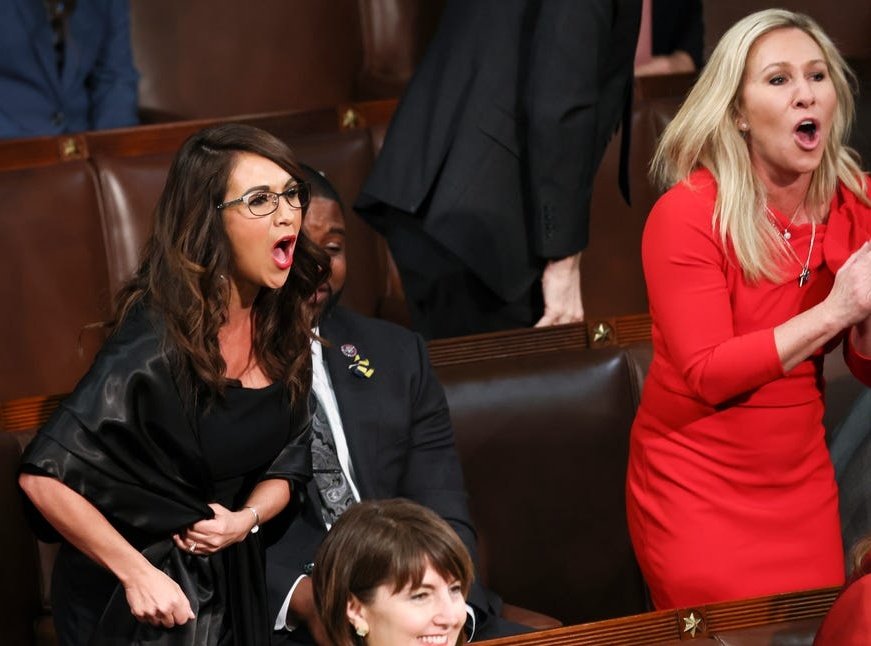
In case you’re a total fucking idiot, allow me to verify something for you- there is a “political industrial complex.” I mean, c’mon, did you need Marjorie Taylor Greene to tell you that? Look, I’m still not a fan of her’s, but even a broke clock is right twice a day. Like, you thought all of those emails asking you for money with the headline “This is the most important election of our lifetime!” and texts asking you “just give us $5!” were something genuine? You never wondered why after you gave one candidate $10 because you believed in them, then you suddenly ended up on other email lists? List sales and swaps are a big business, man. Really though, you needed her to tell you this?
Washington politics is not any different any other industry, it needs it’s customers to survive. Candidates are taught, if they don’t instinctively know, to cater to the audience that keeps the lights on. Small dollar donors. Volunteers. Interest group leaders. Mega donors. Government affairs directors. Basically, the hyper engaged. A lot of people make the mistake of thinking this only means the rich or corporate interests, but it’s really true of anyone that is an active participant in our political dialogue in America full time. Why are we running candidates who mostly appeal to base voters and turn off most of the rest of the public? It’s an industry. That keeps the lights on.
Is there any reason the #1 metric of the DCCC in a swing seat needs to be money? Not really. Let’s be honest, they’re going to spend money in PA-7 or 8, or NJ-7, or NY-17, and so on. The nominee will be funded, so why worry about if they’re good at it? We all know why- the DCCC exists to make sure people get paid. They want candidates who can sustain expensive consultants and pay staff. Is it always necessary? At a certain point, yes. For months on end? No, not at all.
Let’s be honest, shitty people sustain candidates like Graham Platner because they make them money. Does any one think the guy with the Nazi tattoo should walk into a Senate seat for their first political gig? Only if they’re a weirdo. Did anyone think Marjorie Taylor Greene was an ideal Congresswoman? Only if they were so strange that they thought making the other side angry was a positive attribute. It takes a grift to make someone think the guy robbing his mother in law should go to Congress. This is where we are though.
Conflict sells. Anger sells. Telling people they want the most divisive person possible because the other side’s voters, not just candidates and donors, are horrible people who want to kill children, old people, and puppies, it sells. Lining up AOC’s resume next to say Jimmy Carter’s or Barack Obama’s, let alone Dwight Eisenhower or LBJ, and trying to claim she should be a viable Presidential candidate should immediately tell you by common sense that this is silly. It doesn’t for a lot of hyper partisan people. The industry has rewired your brain to believe things that a rational person would not. If you stay in a constant state of conflict against everyone, even your friends, neighbors, and family members that you disagree with, you’re ready to roll with anyone. Suddenly you have no standards. You’re good with whatever slop is put in front of you. J.D. Vance couldn’t even find the private gym in the Senate, and suddenly he’s up to being Vice-President, because he can speak to the hyper engaged.
I do not think for a second that this all bothered Marjorie Taylor Greene even a little bit. I mean, remember “Jewish space lasers?” This woman pushed every crackpot conspiracy theory, hell she even claimed to believe in Q Anon. She’s not mad that you’re being played. She’s mad that she fell out of favor with the cabal in her party and they turned on her. I do think there was some genuine concern over the Epstein Files on her part, there’s something real there, and she couldn’t let it go. She took it too far and they turned on her. She’s mad the grift was over for her. I don’t think for a second that she’s had some genuine, over-arching epiphany.
If you’re just a normal person that votes twice a year and goes about your daily life, you are not the audience of our politicians. They’re not aiming their message at you. They have figured out that you will make a choice within the binary, even if you’re not really thrilled about it. You don’t sustain the business, like any casual consumer is not the main target of any industry. They’d love to hook you too, so that you spend your time on social media raging about a “second Civil War,” but until you get there, they don’t worry much about you. You knew that though. You knew this was an industry and that people made money off of it. You didn’t need Marjorie Taylor Greene to tell you that. The fact that an animal of the system like MTG is the messenger here may seem not right to you, but consider this- Dwight Eisenhower told you about the military industrial complex, and he rose to prominence by being one of the greatest generals in history.
Now I’m going to tell you something though that runs almost entirely counterintuitive. The vast majority of the people in that industry actually aren’t trying to set a trap for you. There are some, and they benefit a lot. Most are people who hold strongly held convictions and beliefs, and think you’ll live in a better world if they can just win. So they take part in this, to win. I’m not sure if this makes me feel better or worse, but I guess it does make things make sense to me.
It was an August evening 18 years ago that I came back to my dorm from cross-country practice and saw a flier on my door advertising internships with the Pennsylvania Democratic Party’s coordinated campaign for future Governor Ed Rendell and Congressional nominee Ed O’Brien. Motivated by my anti-war, pro-union, pro-environmental views of the day, I called the number the next day, and was on board within the week. I did not know at the time that my sports career, which had been ongoing since I was five, was days away from being ended by mono, or that I’d still be doing campaigns 18 years later (which was definitely not my intention at the time). In hindsight though, the transition makes sense and meant the world for me, as politics both replaced my competitive needs, and made me grow in ways I did not suspect it would at the time.
To be clear, 18 years later I could (and plan to) write a book about all the ways I think our political process sucks, and is broken. I often find myself feeling contempt for every part of the system, even as I would say without a second thought that this same broken system has made me a better person, and taught me to empathize with people I would not have had much in common with them. Politics is complicated though, so it’s fitting for me that I’m standing here all these years later observing that my own relationship to it is extremely complicated too. Ultimately though, it has been rewarding.
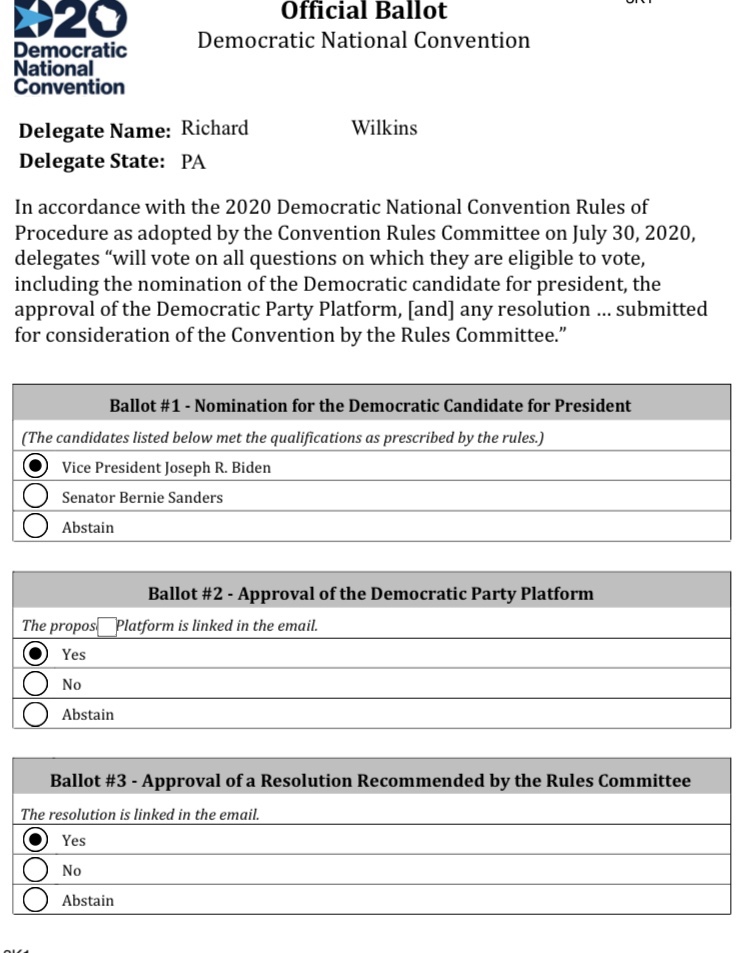
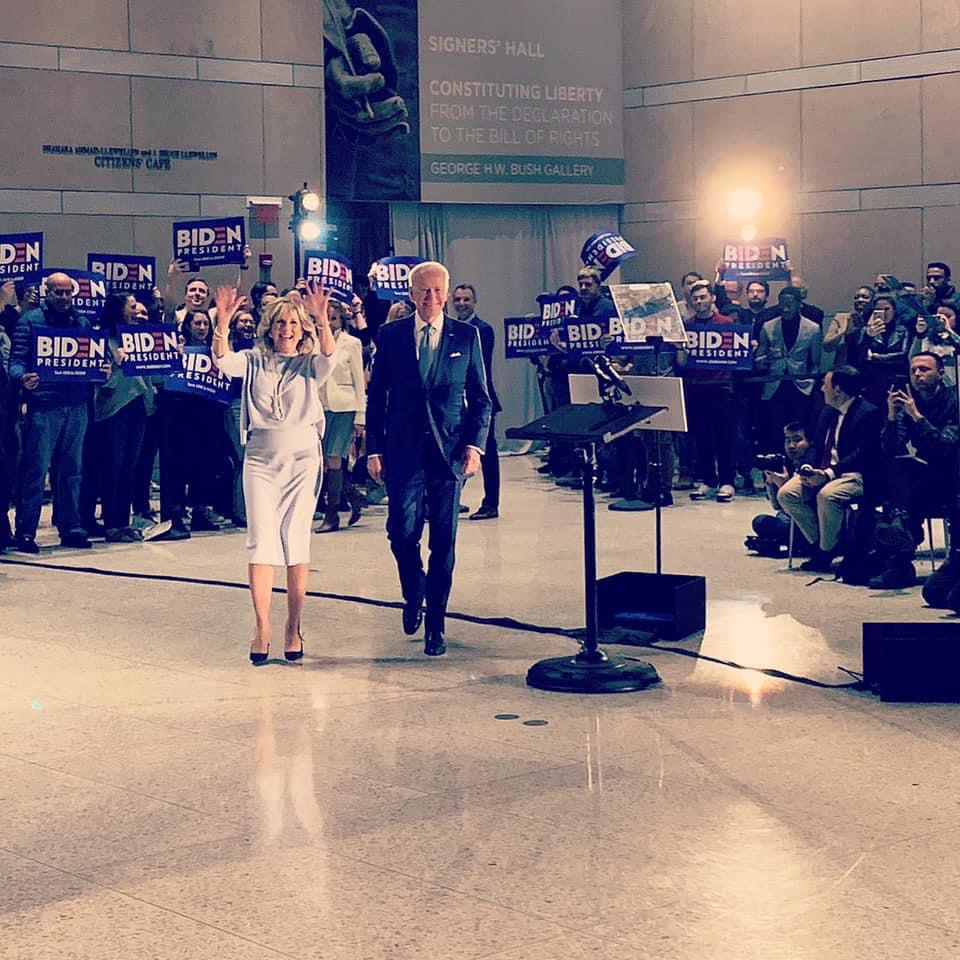
I can’t say I’ve ever had a bigger reward than the one I’ll celebrate this week: national Delegate. Thanks to the Biden campaign selecting me, about 300 people signing my petition, Joe Biden winning PA-7, and slightly over 50,000 people voting for me, I have the honor of a lifetime this week. Yes, it’s a weird year and convention, and I would be lying if I didn’t express my disappointment with not being in Milwaukee this week, but don’t mistake that for me being disappointed in the moment. I’ve spent my entire career working with a chip on my shoulder, that I’ve been passed over or underestimated by people in this industry for varying reasons. This week I can quietly and proudly tell myself I’m good enough, and for the nominee, no less. This is first line in your obituary type of shit here.
Without question, the best night of the campaign.
To be honest, I kind of thought this moment in my political life would happen four years ago, for Secretary Clinton and her campaign. I was an alum of her 2008 campaign, the convention was in my adoptive city of Philadelphia, I was raising money for her campaign and “Ready for Hillary” very early on, and I had friends and allies in close enough contact to them that I was pretty sure my call was coming. I received only small offers early on though and got passed over to be any kind of delegate for Hillary. It was personally and professionally very disappointing, and left me questioning many of my decisions. I got that my fairly extreme lack of diversity (white, straight, Catholic, male, geographically outside of the big cities) was a drawback, but why did it seem like I had nothing to offer a candidate that I admired like none other? The disappointment made me look in other directions, but ultimately I did stick with Hillary, and after the 2016 convention, they suddenly needed me to parachute into Northeast North Carolina to fix a messed up region for them, for which the honor will forever be mine. I made great friends there, and our hard work as a team gave the Tar Heel State a Governor and Attorney General that have improved so many lives. Ultimately though, even that experience left me and so many others feeling empty when Hillary came up short. It was devastating.
The last three years have been a whirlwind, and the experience has changed me politically like it has for so many of you. That all came to a head just two days before Thanksgiving, when I text an old friend who was Vice-President Biden’s head guy in Iowa after reading about him in an article. It would take until nearly Christmas, and I very nearly went in another direction, but I was offered to come to Omaha, Nebraska and join the Biden team as the out-of-state organizer there, and I accepted. I left the day after Christmas, ultimately spending 40 nights in the Midwest, fighting for Joe in Iowa. My role expanded to handling paid canvassing in Southwest Iowa and working with endorsers to fill our precinct captain team out, and it’s fair to say I was kept busy. I would not change it for the world though. Friends of mine, from Senator Casey’s political director to friends from past campaigns, and even people I met on twitter or knew from back home in Easton came out to volunteer for us. The personal highlight of all highlights was when my first major political boss, Senator Chris Dodd came to campaign with us over the last weekend in Council Bluffs (and his caucus day “good luck” call was awesome too). The whole experience was amazing, and during that time period I was informed that I had been selected to be a delegate (with a gigantic assist from Senator Casey’s political director, again). Honestly, even seeing that things weren’t looking great, I had prepared myself for a tough caucus night, and likely being laid off the day after. I got the tough caucus night, and handled it as best I could. Then I got the shocking call that I was being re-assigned to Philadelphia. For the next month, I don’t know if I was only lucky, somewhat good, or some combination, but I could not miss. I woke up every morning on Broad Street of my favorite city in the world, got my Friday night cheesesteaks, got visits from old, close friends I hadn’t seen in years, and oh yeah- things got better. To be honest, I have no idea how I got assigned to digital organizing, it was literally something I had never done in my career (maybe the only thing), but the success was there. My biggest two wins were Oklahoma and Tennessee on Super Tuesday, but the wins continued to just pile up in states I was organizing in- Massachusetts, Idaho, Wyoming, Maryland, Pennsylvania, New Jersey, Ohio, and Delaware- all states I either organized in on the digital team, or later on the Mid-Atlantic “Pod.” Obviously Covid-19 struck about a month after I arrived in Philadelphia, the primaries came to a conclusion earlier than expected, and I was re-assigned eventually full time to Pennsylvania, but there was so much winning- and that was a great feeling. None of that was better than being elected to the convention on June 2nd though, so here we are.
From an identity standpoint, obviously Joe Biden is the best fit to me politically that I’ve probably ever had. It’s a lot more complicated than that though. In 2007 I passed on an interview with his campaign, which was offered to me just two days after I had accepted an offer from Senator Dodd. In 2015, I had the contract in hand to go to New Hampshire for the Draft Biden movement, and ultimately life events gave me second thoughts that kept me with Hillary. Even now, I can’t say this campaign has gone according to script. I also can’t say the similarities I share with Biden are what actually even draws me to him either- his Pennsylvania roots, his Catholicism, his “working class” politics- none of that gets me. I think it’s just how real of a person Joe is. He’s achieved great things, but his life has been far from perfect. He’s suffered personal loss. He’s made damaging gaffes. The “smart” people have consistently dismissed his politics and some even have called him dumb. This is part of what I love about Joe- he’s smarter than the “know it all” types, because he can relate to normal people, he keeps a broad, open tent, and he lets his opponents keep their dignity (which is why they’re opponents and not enemies). When this is over, and it’s 1/20/21 and I’m telling you “I told you so,” remember this is why- the country desperately wants to have a normal human being be it’s leader, someone that can wind down the permanent culture wars we’ve been fighting since Newt Gingrich decided to make all politics as nasty and personal as he could. Joe Biden is genuine, he is decent, and he is a bigger man than the rest of Washington, and I’m only so thrilled that he and I both hung around the business long enough that I could say yes to his campaign, finally.
The first convention I was at, in 2004- a State Senator from Illinois.
Tomorrow will begin my third convention I have attended, my first as a delegate. My father and I drove up to Boston for the first two days of the 2004 Convention, and met this former State Senator from Illinois that you may have heard of named Barack Obama on Boston Harbor, speaking at a League of Conservation voters event the morning of his far more famous convention speech. In 2016 I spent the Philadelphia Convention outside of the hall as well, instead attending the parties and happy hours where you meet everyone. I would be an unequivocal liar if I said I’m not disappointed that I’m in Easton and not Milwaukee right now. There is zero doubt that I would have done anything possible to have the full delegate experience. Unfortunately life dictated otherwise though, so we’re going to do our best to enjoy the moment. I’ll attend the Pennsylvania delegation’s events, watch all the speeches, and attend the Labor caucus meetings (and any other caucus meetings I belong at). I voted for Joe Biden, our platform, and to continue under the post 2016 unity rules. Hopefully we delegates will get to register our support for Senator Harris with some form of vote, for history’s sake. I’m going to treat this convention seriously, because I waited a long f**king time for this. 18 years to be exact. And while no one is owed the opportunity to do what I get to do here, I earned it as much as anyone. I survived all that time, and the 9th position on the ballot in a low information race, for this. So yeah, I’m spiking the football just a bit.
Like our nominee I’ve got plenty of flaws, but also like him I’ve tried to not forget where I came from. I’m really proud to take part in this process and nominate a President we can really be proud of as a person again. I’m fortunate to be here, and fortunate to work for this man, and be a delegate. I remind myself that my immigrant great-grandfather walked across a railroad bridge from New Jersey to Pennsylvania to work in a cement factory with a bunch of other immigrants, then did it again the next day. I get to work for the 46th President of the United States, and represent the Democratic voters of Pennsylvania’s 7th Congressional District to vote for him at the Democratic National Convention. I’m thankful for the moment.

 Apocalypse Vibes